
When Meta Ads Outperform Google Ads (And Why)
When choosing between Meta Ads and Google Ads, many businesses assume one platform must be better. In reality, Strong PPC services rely on understanding when each platform performs best.
Meta and Google solve different problems. The key is knowing which problem you’re trying to solve.
We manage both platforms daily for ecommerce brands, B2B suppliers, and B2C businesses. In certain scenarios, Meta clearly drives stronger performance. In others, Google wins. Understanding the difference protects your budget and improves results.
Let’s break it down properly.
The Core Difference: Intent vs Discovery
Google Ads = demand capture.
People search because they already want something. Google’s advertising model is built around matching ads to specific search queries.
Meta Ads = demand creation.
People scroll. They aren’t actively searching. You interrupt and influence.
That distinction changes everything. To make the distinction clearer, here’s how the two platforms compare side by side:
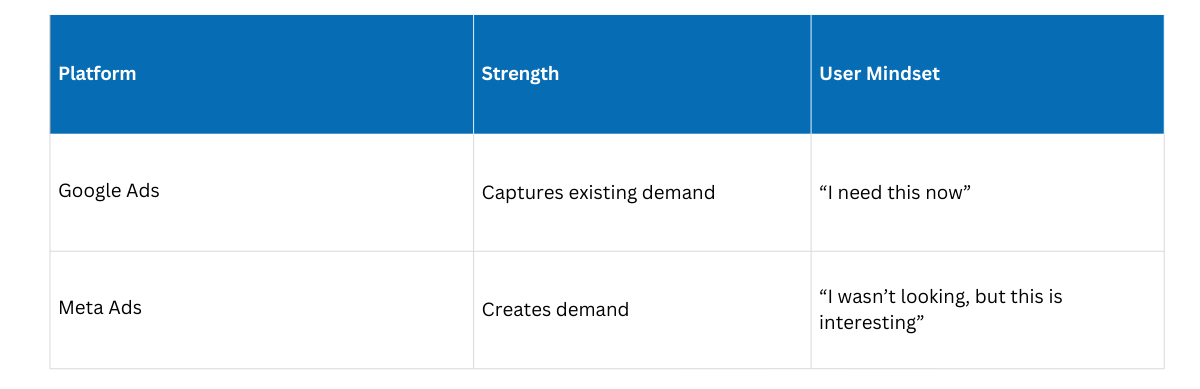
When search volume exists and intent is clear, Google often performs better.
When people don’t yet know they need you, Meta often wins.
When Meta Ads Outperform Google Ads
Meta tends to outperform in five key scenarios.
1. When You're Launching Something New
If nobody is searching for your product or service yet, Google has limited reach.
Meta doesn’t rely on search behaviour. It targets users based on:
- Behaviour patterns
- Content engagement
- Purchase signals
- Similar audience modelling
2. When Emotion Drives the Purchase
Meta is visual. Creative-led. Scroll-based.
If your product relies on:
- Visual appeal
- Lifestyle positioning
- Emotional triggers
- Influencer credibility
Google can’t compete with visual storytelling in the same way.
3. When You Have Strong Creative
Meta performance now depends heavily on:
- Creative testing
- Conversion signals
- Data volume
That shift means:
- Weak creative fails quickly
- Strong creative scales fast
- Data improves performance over time
- Purchases
- Lead volume
- Event completions
4. When the Sales Cycle Is Longer
For B2B suppliers and considered purchases, Meta plays a different role.
It excels at:
- Retargeting across long decision cycles
- Nurturing awareness
- Staying visible during research phases
Meta keeps you visible before and after those searches happen.
Used correctly, Meta supports the full funnel, not just the last click.
5. When Search Volume Is Limited
Some industries simply don’t have enough monthly searches to scale Google Ads.
If search demand caps performance, Meta can:
- Expand reach beyond active searchers
- Discover new audiences
- Generate intent instead of waiting for it
Where Google Ads Still Wins
To stay balanced, Google dominates when:
- Users search high-intent keywords
- Branded traffic exists
- Immediate lead capture matters
- Trust and comparison behaviour is high
How the Meta Algorithm Has Changed
This is where most advertisers fall behind.
Meta used to rely heavily on:
- Interest targeting
- Demographics
- Job titles
- What users watch
- What they click
- What they buy
- How similar users converted
That means:
- Accurate tracking matters
- Pixel data matters
- CRM uploads matter
- Consent setup matters
Budget, Learning Phase & Expectations
Meta needs time.
Typically:
- 2–4 weeks to exit learning
- Stable performance improves with data volume
- Creative refreshes required frequently
But Google performance can plateau when:
- Budgets restrict impression share
- Search demand is capped
- CPC inflation increases
Real-World Considerations
Before deciding, assess:
1. Search demand
Are people actively searching for what you sell?
2. Sales cycle
Impulse buy or considered decision?
3. Creative strength
Do you have strong visuals and messaging?
4. Data infrastructure
Is tracking accurate? Are you feeding Meta enough data?
5. Privacy impact
iOS changes reduced visible attribution across platforms. Reported results may not reflect total influence.
Results vary by industry, audience, competition, and execution. There are no guarantees, only strategy.
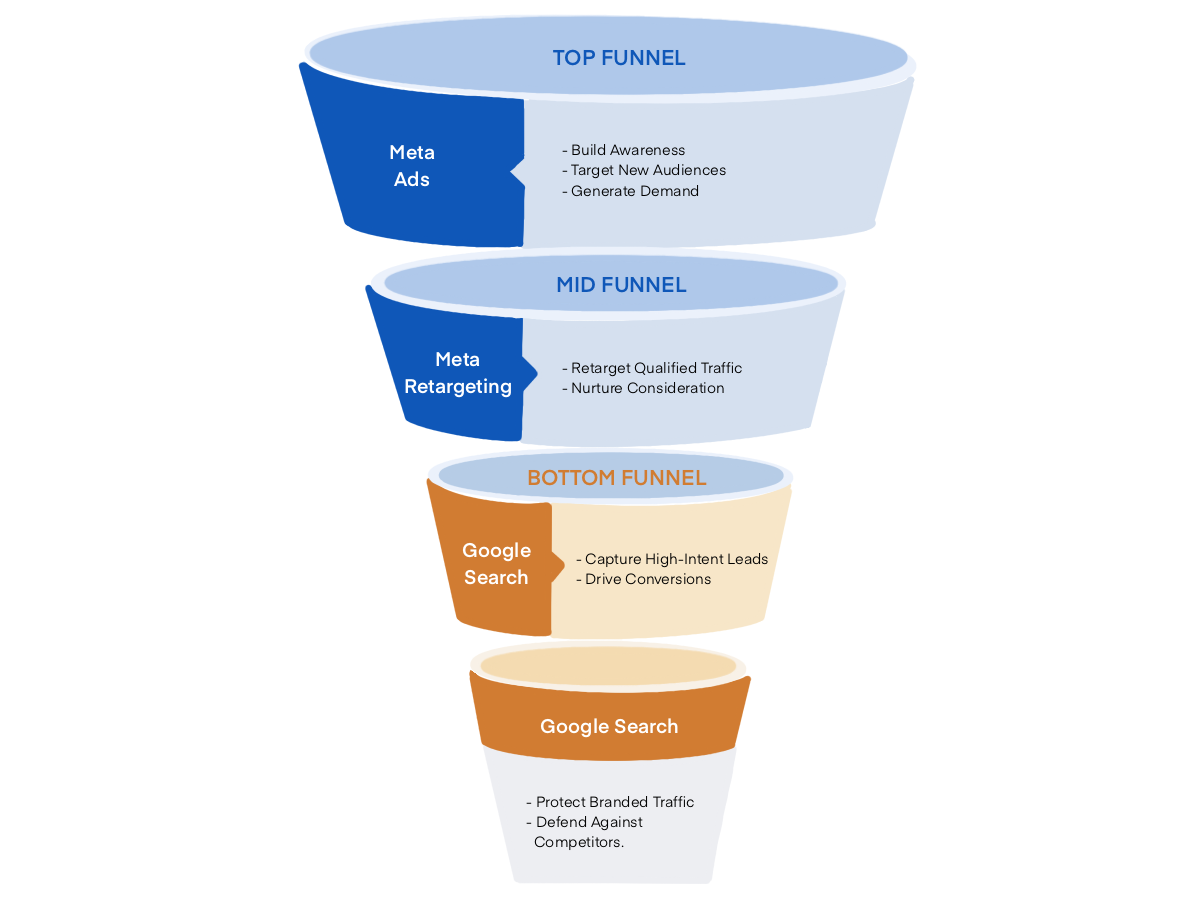
The Strongest Strategy? Combine Both.
The best-performing accounts rarely choose one.
Instead:
- Meta builds awareness
- Meta retargets
- Google captures high-intent searches
- Google protects branded traffic
For ecommerce brands, B2C services, and B2B suppliers, this blended approach often produces the most stable growth.
Frequently Asked Questions
Are Meta Ads cheaper than Google Ads?
Meta Ads often cost less per 1,000 impressions, but that isn't the right comparison. The real metric is cost per qualified lead or cost per acquisition.
Google Ads usually captures high-intent users who are actively searching. That traffic can convert quickly but often costs more per click. Meta ads typically generates cheaper attention, but conversion depends heavily on creative quality, targeting accuracy, and funnel structure.
In some accounts, Meta produces lower overall acquisition costs. In others, Google does. The platform itself is not the deciding factor; strategy, tracking accuracy, and optimisations are.
Should I stop Meta Ads if Google performs better?
No. The platforms serve different stages of the buyer journey. Meta often drives awareness and consideration. Google captures demand when intent is highest. Removing Google can reduce bottom-of-funnel conversions and leave branded searches exposed to competitors. Removing Meta can shrink audience growth and weaken retargeting tools over time.
In most cases, performance improves when both channels operate together, with budget adjusted based on marginal return rather than switching one off entirely
Do Meta Ads work for B2B?
Yes, but they behave differently from B2C campaigns. In B2B, Meta is strong for awareness, retargeting, and nurturing longer sales cycles. Leads may be earlier stage and take longer to convert into revenue. That does not mean the platform is underperforming; it means measurement needs to reflect pipeline growth rather than immediate sales.
For B2B campaigns, success is often reflected in lead quality, meeting bookings, assisted conversions, and overall pipeline rather than short-term revenue alone.
Conclusion: When Meta Potentially Outperforms
The question isn’t whether Meta Ads or Google Ads are better. It’s whether your PPC services are structured around demand creation, demand capture, or both.
We build paid media strategies around real search demand, audience behaviour and data signals, not platform bias.
If you're unsure which approach suits your ecommerce brand, B2B service, or B2C product, we’ll assess your demand levels, competition, and data setup, then build the right mix.