
SEO vs Google Ads: Which Drives Better Leads Long Term?
Choosing between SEO and Google Ads isn’t about which channel is “better”.
It’s about how quickly you need leads, how long you want results to last, and how much control you want over spend in the short term versus the long term. For any digital marketing strategy focused on sustainable growth, understanding that difference matters.
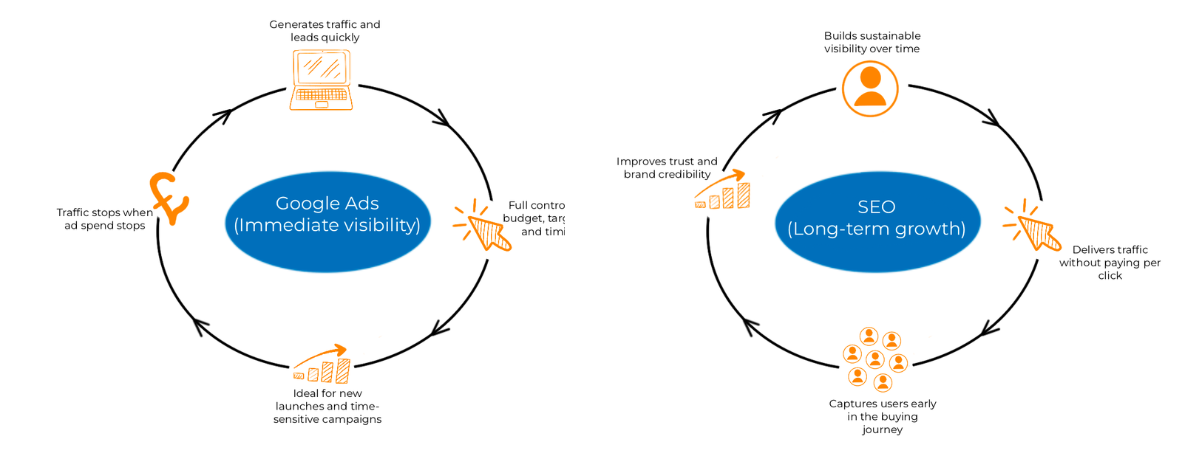
Google Ads is built for immediacy.
SEO is built for durability.
This comparison matters most for businesses that rely on search to generate consistent enquiries, including ecommerce brands, B2B suppliers, and B2C service providers.
While the sales cycle, average order value, and urgency differ across these models, the challenge is the same: generating leads now without sacrificing long-term growth.
Speed versus staying power
Google Ads delivers visibility almost instantly.
You can launch a campaign, target specific keywords, locations, and intent, and start appearing at the top of search results within hours. That’s why many digital marketing agencies use Ads early on, especially for new businesses or short-term campaigns.
SEO doesn’t work on the same timeline.
Organic visibility builds through relevance, content, and site quality. Most SEO services start to show measurable movement in 3–6 months, with stronger, more consistent lead flow developing over 6–12 months.
The trade-off is what happens next.
With Google Ads, traffic exists only while you’re paying.
With SEO, visibility continues even when spend slows.
Why SEO tends to win long term
Organic search results are widely perceived as more trustworthy than ads.
Users know paid listings exist because someone is bidding for them. Organic rankings feel earned, which changes how people behave once they land on a site. SEO leads are more likely to:
- View multiple pages
- Engage with supporting content
- Return later if they don’t convert immediately
Through blogs, guides, and FAQs, SEO captures users earlier in the buying process. These visitors may not become leads straight away, but they often return when they’re ready to act. Over time, this leads to more consistent, higher-quality enquiries.
For businesses investing in SEO services, this compounding effect is what makes SEO such a strong long-term channel.
Where Google Ads still excels
None of this makes Google Ads the wrong choice.
Google Ads works particularly well when you need:
- Immediate lead generation
- Visibility for new products or services
- Promotion for time-sensitive offers
- Tight targeting by location, device, or intent
You quickly see:
- Which keywords convert
- Which messages drive clicks
- Which landing pages perform best
That data can then feed into a longer-term SEO strategy, reducing guesswork and improving focus.
Lead quality: volume versus readiness
One of the biggest differences between SEO and Google Ads is how leads develop.
SEO leads often come from users who have:
- Researched extensively
- Compared options
- Engaged with multiple pages before converting
Google Ads compresses intent.
You’re paying to appear at the exact moment someone is searching to take action. That can produce fast results, but performance depends heavily on keyword selection, competition, and landing page quality.
Both channels can deliver strong leads. The difference is when those leads mature and how sustainable they are.
The impact of showing up more than once
Using SEO and Google Ads together can significantly improve performance.
When a business appears:
- In a paid listing
- And again in organic results
Repeated visibility builds familiarity and credibility, especially in competitive search results. For local businesses investing in local SEO services, this combined presence can make a noticeable difference when users are choosing between similar providers.
Cost, control, and long-term value
Google Ads offers a high level of control.
You decide:
- Where ads appear
- Which keywords trigger them
- How much you spend each day
SEO works differently.
Once organic rankings are established, they continue to generate traffic without paying for each click. Over time, costs reduce while value continues to build. This is why SEO services often deliver a lower cost per lead in the long run, particularly for businesses focused on growth rather than short-term wins.
Are users becoming blind to ads?
In some industries, yes.
Highly competitive markets can train users to scroll past ads entirely and focus on organic results. Google Ads still has a place, but relying on it alone becomes riskier as competition increases and costs rise.
SEO provides balance. It puts your business where attention naturally goes, even as ad fatigue grows.
The most effective long-term approach
The strongest results usually come from using both channels together, not equally, and not forever.
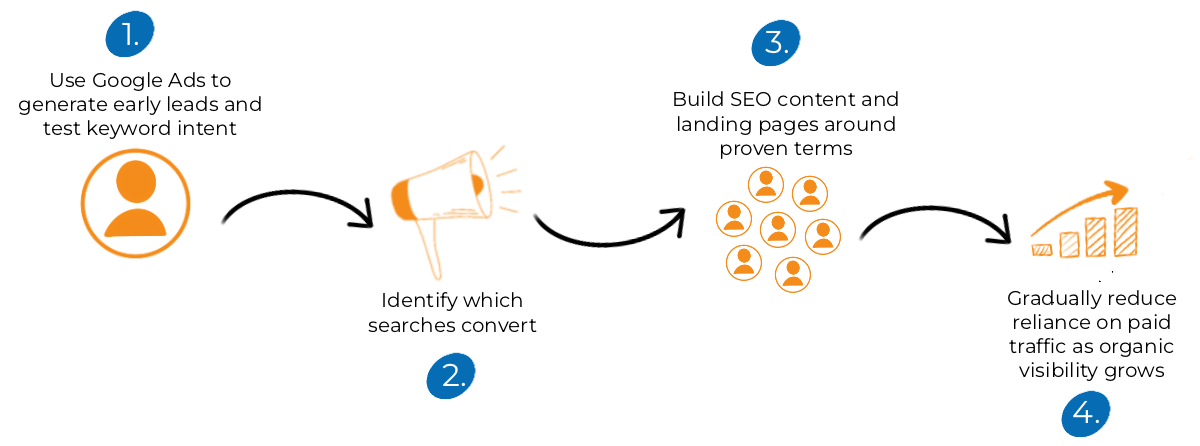
A practical approach looks like this:
- Use Google Ads to generate early leads and test keyword intent
- Identify which searches convert
- Build SEO content and landing pages around proven terms
- Gradually reduce reliance on paid traffic as organic visibility grows
So which drives better leads long term?
SEO does, if you’re prepared to invest time.
Google Ads delivers speed.
SEO delivers consistency.
For businesses looking beyond short-term campaigns, SEO forms the foundation of a more sustainable digital marketing strategy, with Google Ads supporting it where speed and control are needed.
Should you stop Google Ads once SEO improves?
Not necessarily.
As organic rankings strengthen, it can be tempting to reduce paid spend. In some cases, that makes sense. In others, it creates gaps competitors quickly exploit.
Google Ads can continue to add value by:
- Protecting branded search terms
- Dominating high-intent commercial keywords
- Increasing overall visibility when combined with organic listings
- Testing new opportunities before committing to SEO
Frequently Asked Questions
Is SEO worth it if Google Ads is already generating leads?
Yes, because they serve different purposes. Google Ads gives you immediate visibility. You can appear at the top of search results as soon as campaigns go live, but that visibility only exists while you're paying for it. SEO builds organic rankings that continue to drive traffic over time without paying per click. It reduces long term dependency on ad spend and strengthens your overall presence in search results.
Many business use Google Ads to generate short-term leads while SEO builds sustainable traffic in the background. Overtime, this reduces cost per acquisition and improves stability.
Do SEO leads convert better than Google Ads leads?
It depends on the intent behind the search. Users who find you organically often; spend more time researching, view multiple pages, and return before converting. They may be earlier in the buying journey, but they often build stronger trust before enquiring.
Google Ads, however, can capture high intent searches extremely efficiently, especially when targeting keywords that show clear buying signals.
Rather than one converting "better" than the other, the real difference is timing within the decision process. Paid search captures immediate demand. SEO supports consideration and long-term decision making.
How long does SEO take to start generating leads?
Most businesses see measurable progress within 3-6 months. More consistent lead flow usually develops within 6-12 months. The timeline depends on factors such as:
- Competition in your industry
- The current quality of your website
- Technical SEO foundations
- Content depth
- Authority and backlink profile
What happens if I stop running Google Ads?
Traffic and leads from paid search stop almost immediately. Unlike SEO, Google Ads does not create ongoing visibility once campaigns are paused. If your enquiries rely heavily on paid campaigns, you may see a noticeable drop in lead volume. Importantly, stopping Google Ads does not damage your organic rankings. Google keeps paid and organic algorithms separate. However, if paid traffic was contributing significantly to overall conversions, the business impact can feel immediate. This is why relying on a certain channel often creates risk.
Should SEO and Google Ads be used together?
In most cases, yes. They support different stages of the buying journey:
- SEO builds long-term visibility and trust
- Google Ads captures high-intent searches immediately
- Retargeting brings previous visitors back
- Branded search ads protect your name from competitors